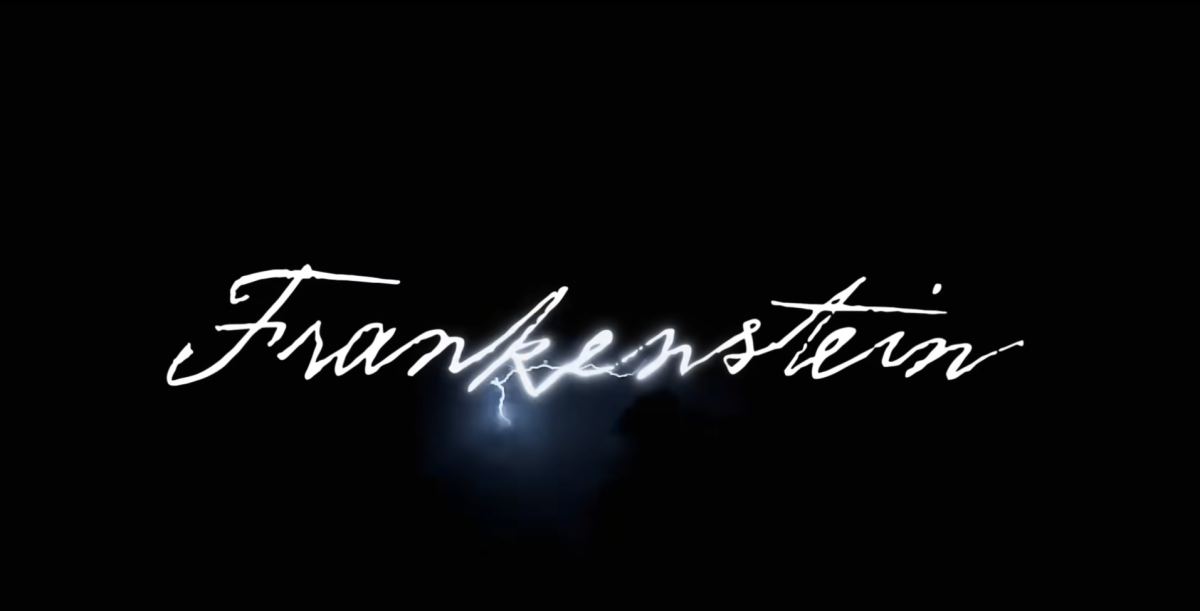
On October 17, 2025, a rendition of a 1818 Gothic fiction novel came to life on Netflix: Frankenstein (2025).
What originally started as a ghost story-writing competition in the early nineteenth century, the groundbreaking Mary Shelley novel details the tale of Victor Frankenstein, a tormented scientist whose only desire is to conquer the unknown and instill life into a creature made by his own hands. In doing so, he forms his greatest creation, yet his greatest fear. Although the Creature, his newfound enemy, mercilessly torments his creator, audiences understand the pain of the Creature’s loneliness and his inability to find comfort among humans.
The new movie adaptation, although frightening at times, leaves fans with a newfound sense of understanding about the misunderstood people of the world, as they are caught between feeling the fright of Victor and the isolation of the Creature.
Directed by the talented Guillermo del Toro, this film comes to life under the beauty of the scenery, the unimaginable acting, and the reality of what the film encompasses.
At first glance, Frankenstein (2025) may churn the stomachs of the audience. With the amount of blood and gore that appear throughout the movie, the film is not for the faint of heart. If you are able to see past the excess amount of guts and broken limbs, the camera shots are one of the more noticeable aspects of the film. Oscar-nominated cinematographer Dan Laustsen is the mastermind behind the creation of this movie, as he can capture both the scenery and emotions of the characters in the most vivid detail possible. With a simple sunset or a close-up of a character’s face, Laustsen fought to capture the realism this film requires, as it allowed him to dive deeper into what the story was about. His use of various lighting, like in the form of firelight or 20-kilowatt lamps, or different lens types, like a 24 millimeter shot, gave him the ability to present the complexities of the story that can be discernible to the audience. In an interview with Variety, Laustsen discusses what he felt was important to convey with Frankenstein (2025).
“‘I think it’s [the story] about love and forgiveness,” Laustsen said. “‘And that is very important now.’”
Another aspect of the film that has been captivating audiences has been the excellent acting, specifically from the two main characters. Oscar Isaac, who plays Victor Frankenstein in the film, is no stranger to success in Hollywood. With performances in “Inside Llewyn Davis” and “Scenes From a Marriage,” Isaac has demonstrated his versatility and adaptability to any character he plays. He further cements these talents with Victor Frankenstein: both the egotism and rationale of the character are powerfully demonstrated, as Isaac dives into the adversity of a man dealing with rage and obsession simultaneously. From his first passion for creating the Creature to his moments aboard a boat in the Arctic at the end of the film, Isaac plays Frankenstein as if he truly is the character and not just a figment of Mary Shelley’s remarkable imagination.
On the side of the “antagonist,” actor Jacob Elordi plays an equally convincing Creature in the film. Despite the numerous hours Elordi spent in the makeup chair to transform into the infamous monster, his real appeal comes from the acting itself. From his very first moments on-screen, Elordi showcased not only his physical alterations but also his emotional depth from when the Creature was first created to the height of his revenge against Frankenstein.
Elordi has similarly earned praise for his voice, as the gravely nature of the Creature’s dialect was not an easy feat for Elordi to accomplish. Although Elordi’s character uses only non-verbal expressions in the earlier parts of the movie while he is learning to speak, the eventual voice he had to develop for the Creature turned out to be one of the focal points of his performance despite its hardships. In terms of this challenge, Elordi describes the process of mastering the Creature’s tone for Hits Radio.
“It was a constantly evolving process up until I recorded the voiceover, which was the end of the film, which was quite cool because it [his voice] was always moving,” Elordi said.
Lastly, the final compelling element of Frankenstein (2025) is the messages that can be found with closer examination. Underneath the gothic nature of Frankenstein’s abode or the gory demise of the Creature’s victims, many complexities reveal why the characters are the way they are. Although Victor Frankenstein is inherently selfish and prudish, audiences can understand that, despite his initial fear, he feels guilt over bringing an unwanted entity into the world that is shrouded and banished from modern society. For the Creature, his isolation and abandonment cause him to become violent and vengeful toward Frankenstein; however, he feels as if he has no choice. Since he has experienced such hatred and vileness from other humans he has encountered in his life, he believes that ridding himself of the person who started it all is one of the only ways he can cope with his trauma. Although both characters have important surface-level analysis, what is not immediately apparent about them is the most significant part of the movie to understand. Indiana Humanities notes a moment in del Toro’s British Academy of Film and Television Arts (BAFTA) speech where he emphasizes his reasoning behind the creation of the film and what it means to him symbolically.
“Shelley’s creature gave ‘voice to the voiceless, presence to the invisible,’” del Toro said. “‘Sometimes to talk about monsters, we need to fabricate monsters of our own.’”
Overall, Frankenstein (2025) was an enthralling movie that brought life to a timeless story. Through Mary Shelley’s nineteenth-century words and Guillermo del Toro’s modern twist on the tale, the cinematography, acting, and messages were brought to the screen in a way that cannot be replicated. Though this film is sure to make audiences cower at the frightening and gory scenes, it’s all meant to tell a story of perseverance and compassion, even when the misunderstanding of characters and their actions leads to violence and turmoil. At the heart of this film is an idea that sprang from the mind of a young Mary Shelley, never to be forgotten.